

Maximizing ROI with BIM Clash Detection in Modern Construction Project
The financial success of modern commercial, residential, and infrastructure projects depends on seamless coordination between architectural, structural, and MEP (Mechanical, Electrical, Plumbing) disciplines. Historically, spatial conflicts between these systems were only discovered during physical installation on the construction site. This delayed progress and resulted in expensive field modifications, material waste, and strained stakeholder relationships.
Today, implementing data-rich Building Information Modeling (BIM) solutions—specifically advanced clash detection workflows—enables project teams to identify and resolve spatial discrepancies in a digital environment long before construction crews arrive on site.
The True Cost of Design Conflicts
When an air conditioning duct intersects a structural beam or a wastewater line runs directly through an electrical cable tray, the physical progress on site grinds to a halt. The consequences of these design conflicts are significant:
-
Material Waste: Pre-fabricated components must be discarded or heavily modified on site.
-
Labor Demobilization: Specialized subcontractors wait idle while designers scramble to issue corrective revisions.
-
Compounded Schedule Delays: A single major clash can ripple across subsequent construction phases, pushing back handover dates.
By extracting intelligent data representations through professional BIM services, these multidisciplinary design conflicts are highlighted and resolved systematically during the design phase.
How the Clash Detection and Coordination Workflow Operates
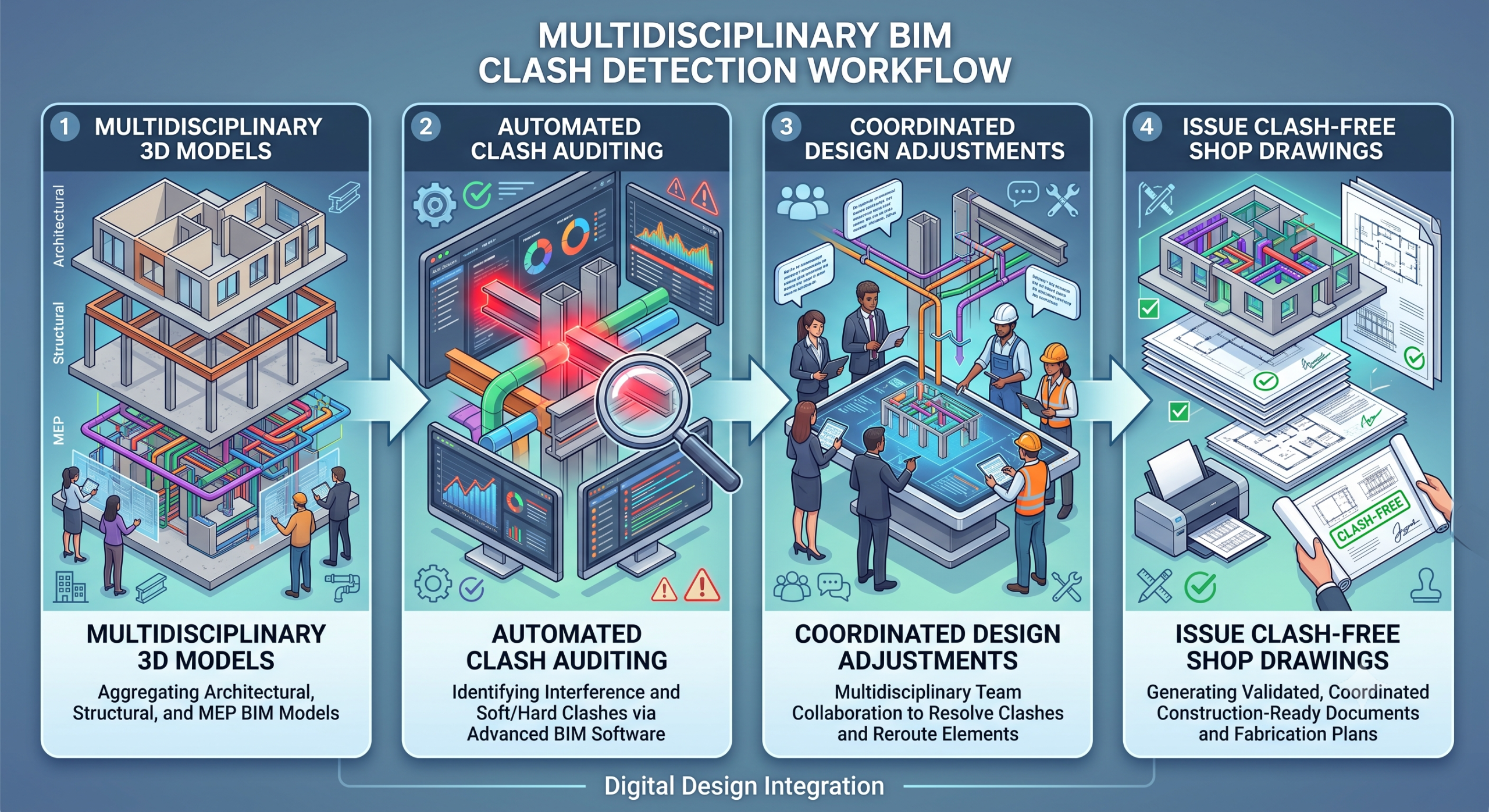
True digital project delivery requires more than just generating isolated 3D models. It relies on an integrated coordination process:
-
Intelligent 3D Modeling: Separate, data-rich architectural, structural, and MEP models are developed to mirror exact construction specifications.
-
Automated Spatial Auditing: Specialized software evaluates the combined models to flag hard clashes (physical intersections) and clearance conflicts (insufficient space for maintenance or code compliance).
-
Collaborative Conflict Resolution: Coordinated engineering teams review the flagged areas to adjust routing and structural elements digitally, ensuring every system fits perfectly within its allocated space.
The Downstream Financial Benefits: 4D and 5D Integration
Resolving design conflicts early prepares your project for advanced BIM use cases that enhance financial control:
Enhanced Project Transparency: Clean, clash-free BIM data feeds directly into 4D construction sequencing to optimize field timelines, as well as 5D cost management systems for highly precise budget forecasting.
Secure Your Project Margins
Don’t let preventable coordination errors drain your project profits. Implementing comprehensive BIM clash detection and coordination solutions reduces site issues, streamlines subcontractor coordination, and protects your bottom line.
To find out how our specialists can streamline your coordination workflow, explore our comprehensive digital capabilities on our BIM Services Page. If you have an active set of project drawings that require immediate multidisciplinary integration, Connect with Al Aknan Engineering to speak with an engineering coordinator today.